
RECAP: Seaside Seaweed Cyanotypes
Thursday, February 12th, 2026 — Circle Creek Conservation Center, Seaside, Oregon
This year marked the 4th annual Seaweed Cyanotypes workshop. This year, the workshop was hosted in Seaside at the Circle Creek Conservation Center in partnership with North Coast Land Conservancy. The gathering was especially meaningful as it coincided with the 10th anniversary of the Cape Falcon Marine Reserve, celebrating a decade of marine protection, research, and coastal stewardship.
Celebrating 10 Years of Cape Falcon Marine Reserve
Designated in 2015, Cape Falcon Marine Reserve protects nearly five miles of rocky shoreline and ocean habitat between Cannon Beach and Manzanita. Within the reserve, extractive activities are prohibited, allowing kelp forests, rocky reefs, fish populations, and invertebrate communities to thrive and be studied over time.
The North Coast Land Conservancy new Marine Program now oversees this marine reserve with outreach events and tidepool ambassadors throughout the year. Hosting this year’s Seaweed Cyanotypes workshop alongside the reserve’s 10-year celebration felt like a perfect blending of art, science, and place.

Cyanotypes
Sam Block of Block Studio began by situating cyanotype within the broader history of photography. Long before modern film and digital cameras, cyanotype offered a simple yet revolutionary way to capture detailed impressions using sunlight. The process became widely known through the work of Anna Atkins, who used it in the 1840s to document seaweed specimens, which makes it feel so special that we do these workshops using seaweeds!
Alanna of Shifting Tides (and co-founder of Winter Waters) introduced participants to the art of pressing seaweed. Similar to pressing flowers, seaweed pressing requires extra attention due to its high moisture content. Proper drying techniques ensure specimens retain their shape and detail while preventing them from sticking permanently to the paper, especially important when they will later be lifted for cyanotype printing.
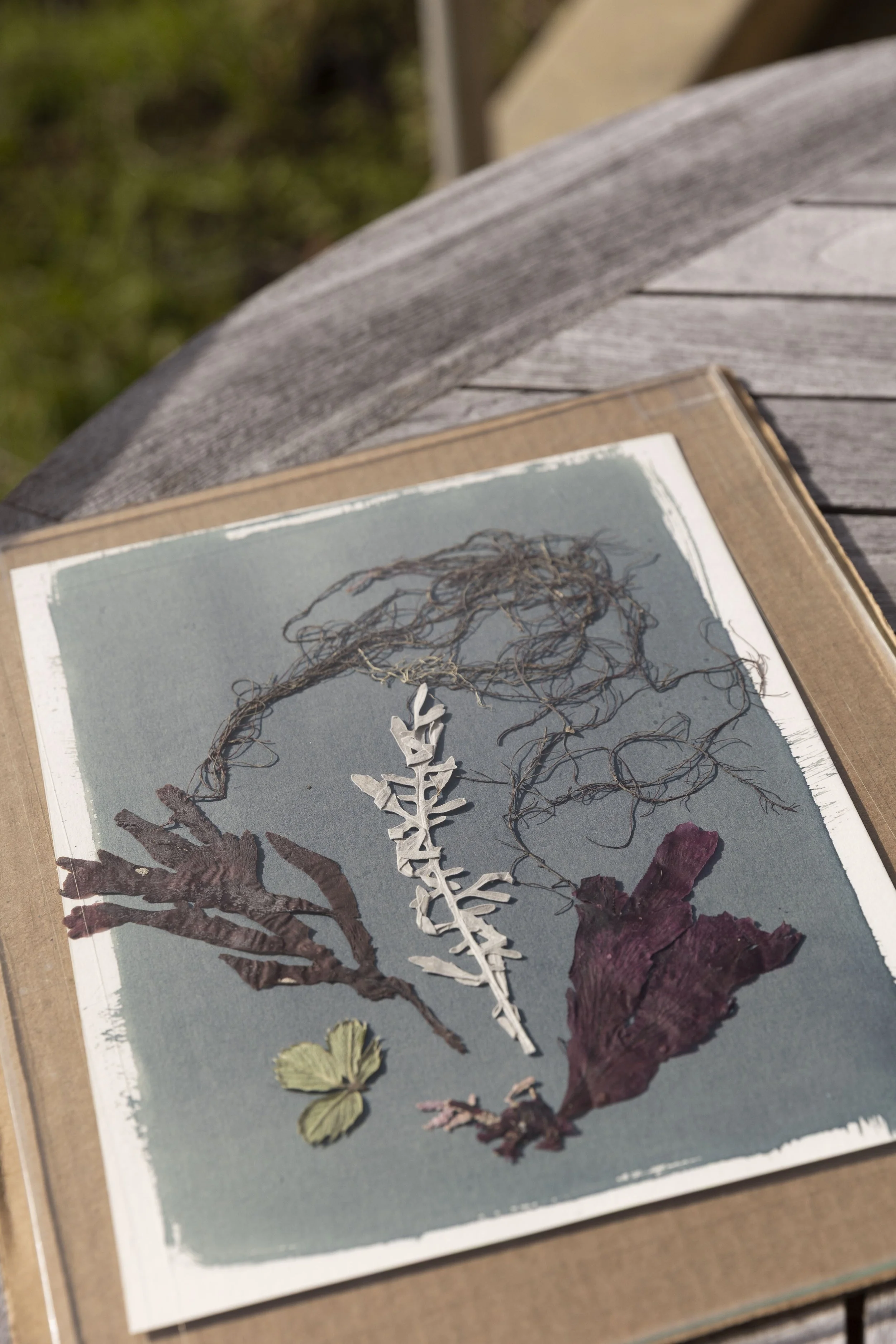
With pressed seaweeds ready, participants selected their specimens and thoughtfully arranged their compositions on the pre-treated paper. Each design reflected a different perspective on the coast, delicate branching algae, big bold kelp blades, intricate layers of diverse textures layered.
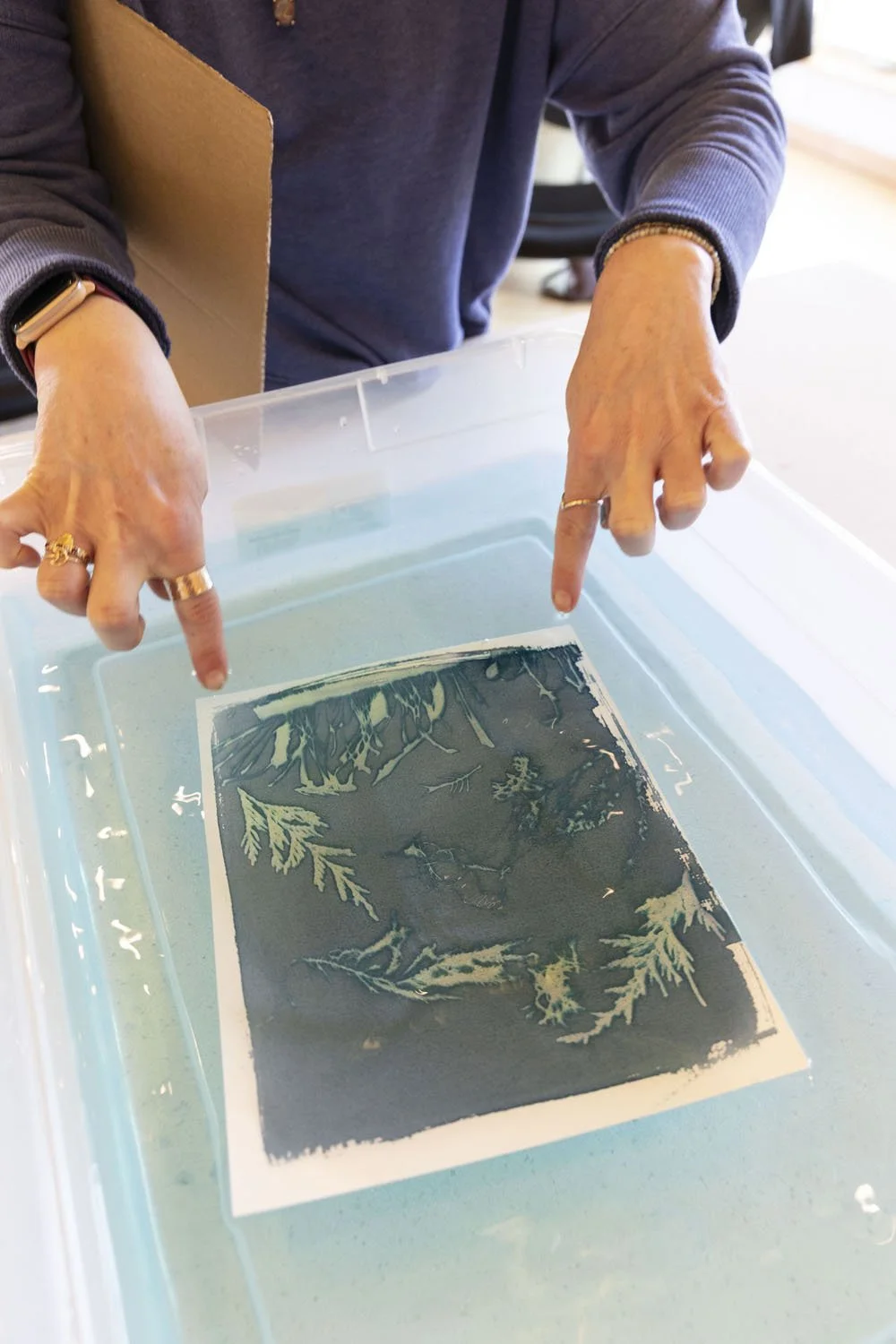
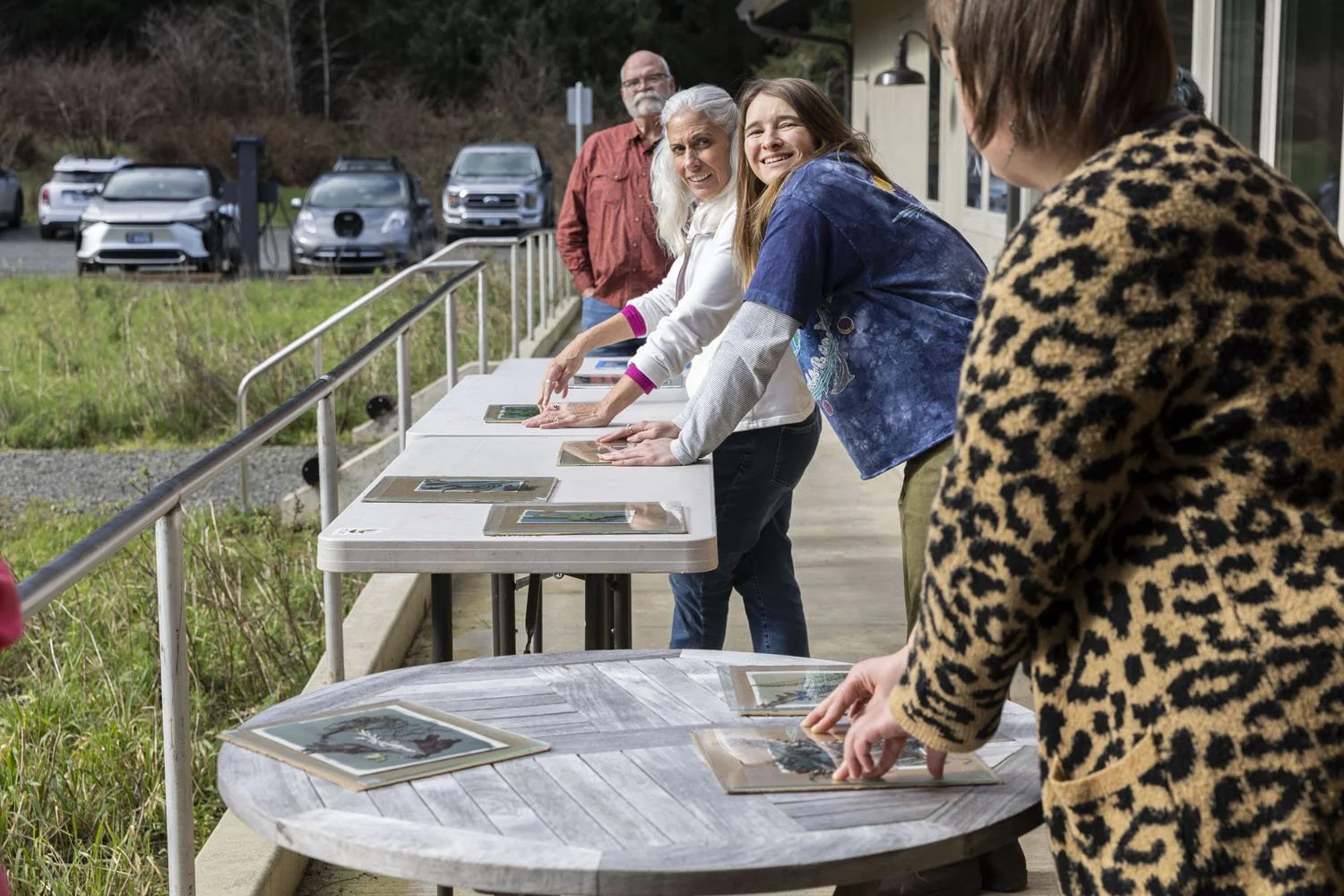
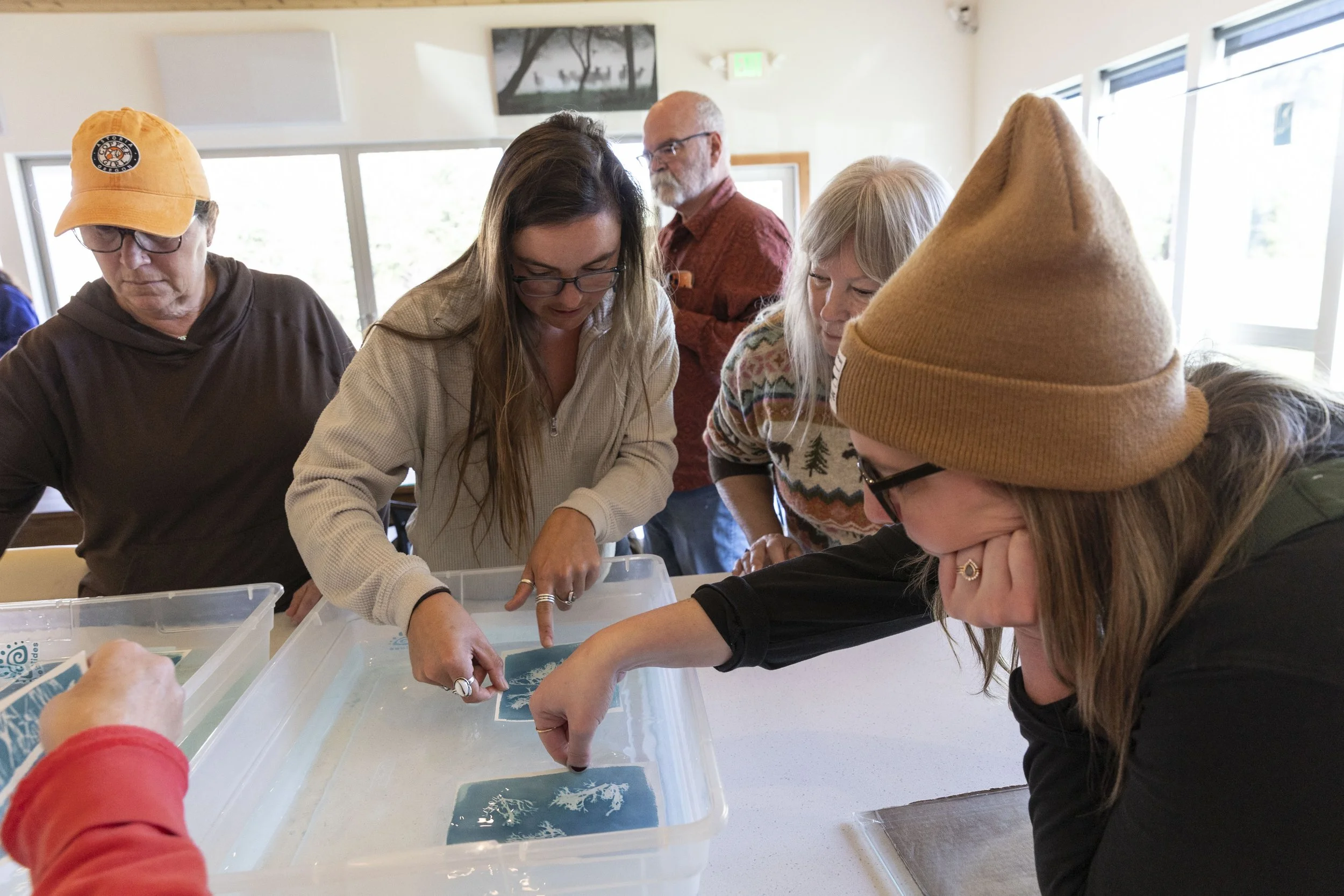
We then stepped outside to let the surprising winter sunlight do its work. Exposure times varied depending on cloud cover; overcast skies required longer patience, but we got very luck with sunshine! Once exposed, the prints were rinsed in water and hung to dry, revealing that iconic deep blue transformation.

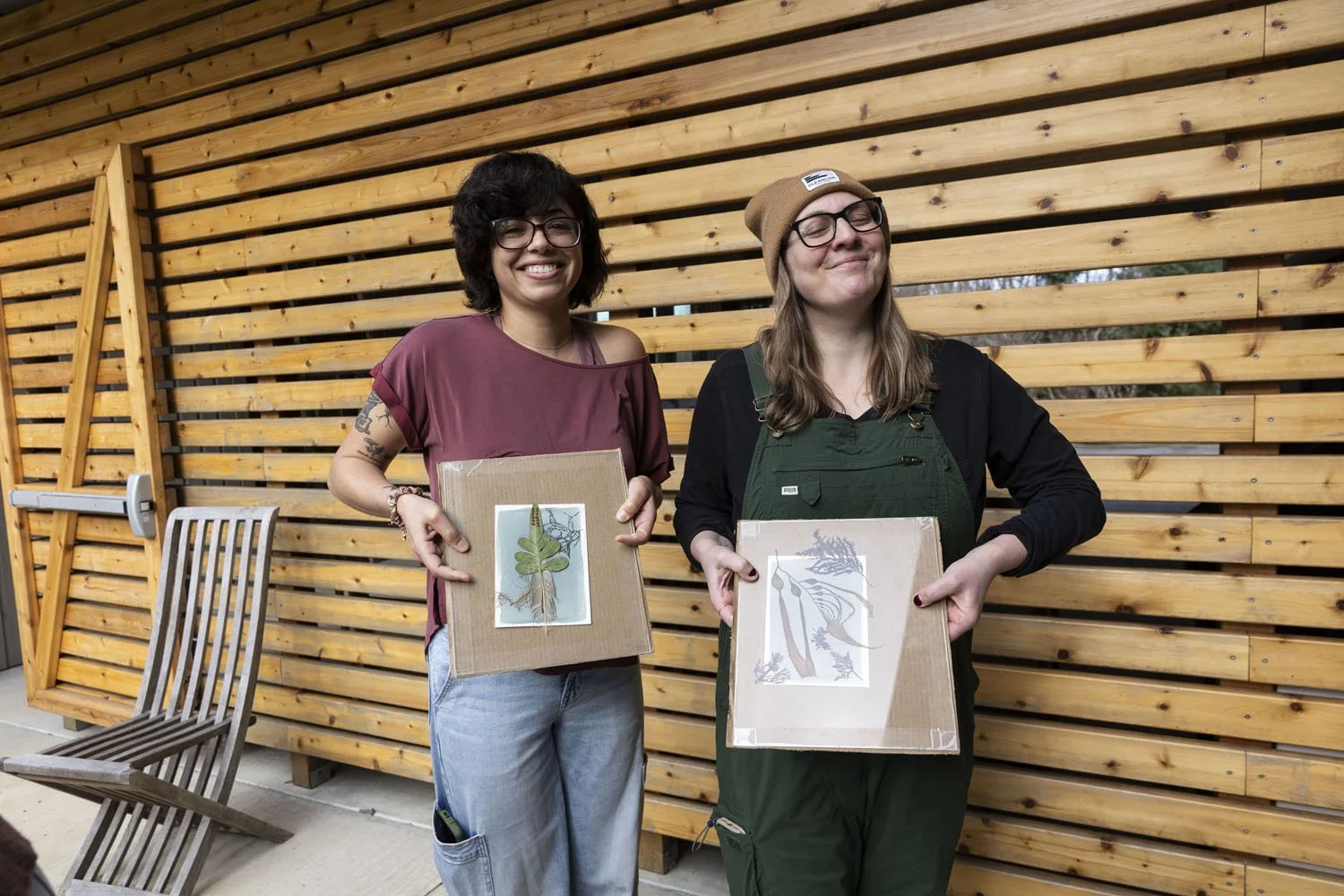
One of the most joyful moments of the day was watching the display wall gradually fill with finished prints. Each participant created a set of five pieces to take home, and with over 100 prints hung on the wall by the end, no two sets looked alike. The variety of seaweeds, arrangements, and creative interpretations made it feel like a living gallery of the North Coast itself!
A portion of this event was supported with a grant from the City of Seaside Tourism Advisory Committee, funded by room tax dollars. Thanks, Seaside!